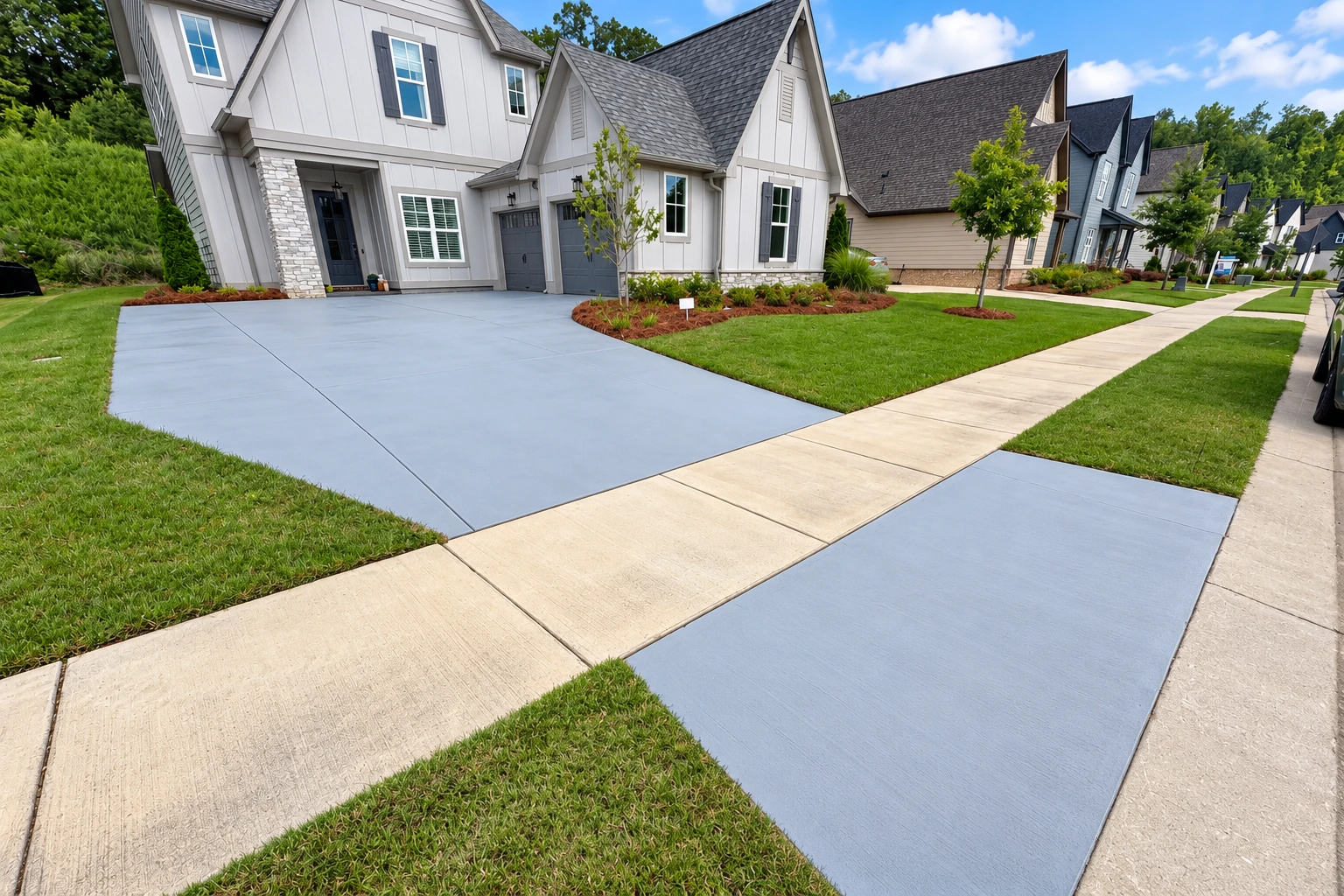
Concrete sidewalk building in San Clemente CA - a walk built on packed, solid ground
Cracked, heaved or sinking path to your door? We dig out, pack the base and pour a new walk that drains away from the house.
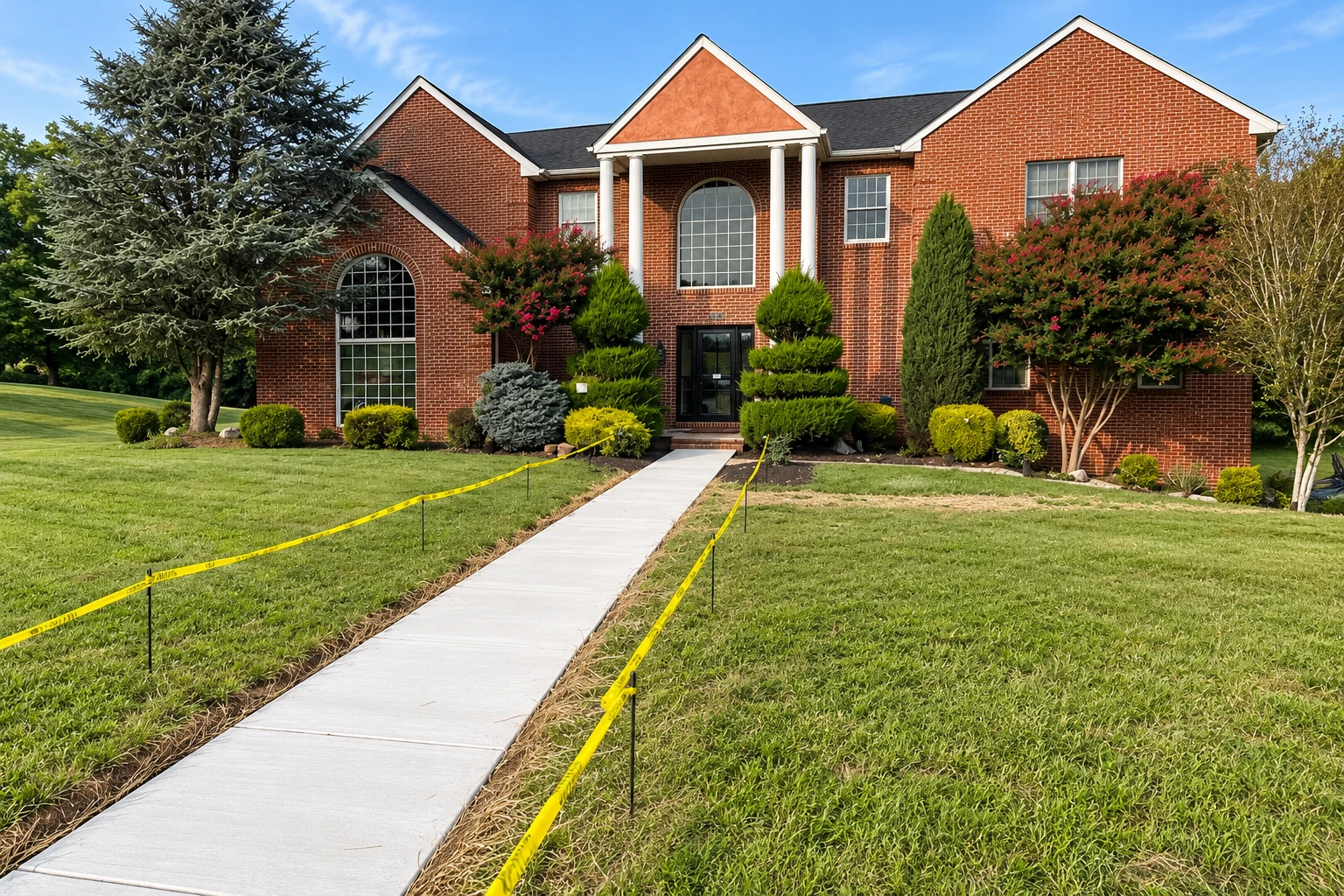
What goes into building a new concrete sidewalk?
Concrete sidewalk building in San Clemente means we break out the old walk if there is one, dig out and pack the ground underneath, and pour a reinforced path that sheds water away from your house and feels solid underfoot.
Most people call us when the old walk has broken into pieces, one slab has sunk and started catching toes, or water sits against the house after it rains. The price moves with the length and width of the path, whether we're breaking out and hauling off old concrete, how much digging the base needs, the reinforcement you pick and any finish beyond a plain brushed texture, and the schedule mostly turns on the weather and the curing wait before you can use it. I'll come out, measure it and give you a written quote that lists what's included, like the reinforcement and the haul-off, so you can compare it line by line.
How we build your concrete sidewalk
We start by breaking out the old walk and hauling it off, then I check where the water runs so the new path falls away from your house instead of toward it. Next we dig down to firm soil and pack the subgrade, the ground the slab actually sits on, because a walk that's only raked level will settle right along with the loose dirt under it. We set the forms and lay the steel on small supports so it ends up inside the slab instead of on the bottom, and before we pour I'll show you what reinforcement goes into your walk and why, since it's the part you can't see once it's buried. We pour early, before the midday heat dries the top too fast and leaves it weak and dusty, then give it a broom finish, a light brushed texture that keeps your feet from slipping when it's wet. Control joints, the grooves we cut across the walk, go in on time so that when the concrete shrinks and cracks, it does it in the groove and not across the middle of a panel. Then it cures, which is the wait while the concrete gains strength, and we keep it from drying out too fast so the surface stays hard. If something has to give in the budget, I'd trim the finish before I'd trim the base, because nobody sees the base the day we pour, but it decides whether your walk stays put.
A new walk usually meets other concrete, so we look at what it ties into. If the path runs to the garage, it's a good time to talk about garage floor concrete so the two surfaces meet evenly at the door, and if you'd like color, stain or a pattern instead of plain gray, our decorative concrete work can go right onto the same walk.
Welded wire mesh for most walks
Mesh is steel wire welded where the wires cross, and it goes in faster than tying single bars, which helps keep a home walk affordable. It suits a straight path on settled ground that carries people, not heavy loads.
Rebar where the ground asks for it
Rebar is individual steel bars laid in a grid inside the slab, and it holds the pieces together if the concrete cracks. It takes more time and steel, so I suggest it where the walk crosses fill, swelling soil or a spot where a mower or cart crosses often.
What San Clemente ground means for a concrete sidewalk
Some concrete work here falls under the City of San Clemente's engineering standards, and those come with their own rules. On those projects the ground gets wetted down before the pour until the city inspector or the soils engineer is satisfied, and concrete that touches the native soil has to use Type 5 cement unless the City Engineer approves something else. When I look at your walk, I'll tell you whether it falls under those standards, so the right mix and prep are planned before the truck shows up.
The ground itself is the main reason I'm fussy about the base. A city draft report on geologic hazards describes, in general terms, expansive soil, the kind that swells when it's wet and shrinks when it dries, as a real risk for anything sensitive to settling, with cracking and uneven settling as the result. The same report describes fill that was placed without proper compaction or an engineer watching, which can settle unevenly and leave a slab without even support underneath. A walk is a thin, light slab, so it feels that movement quickly. We dig out loose or soft fill until we reach firm ground, pack what goes back in and pick the reinforcement to suit what we find. We run into the same kinds of ground on jobs in Dana Point and San Juan Capistrano, and across the rest of south Orange County where we work.
Walkways, edges and finishes
Why call us for your sidewalk
I measure and quote it myself
I come out myself to look at your walk, check the slope and look for the loose fill that's common around here, then put the estimate together. Our own crew does the work with a crew lead running the site, so the plan you heard is the plan that gets poured.
In business since 2021
Before I started this business in 2021, I worked for a big commercial concrete outfit on slabs, parking lots and foundations. That's where I learned to plan a pour down to the details, and a path to your front door gets the same planning.
Fully licensed and insured for your job
We're fully licensed and insured. The crew working at your house is covered while they're there, and you're hiring a contractor who answers to the state for how the work is done.
On a walk, the ground under it matters more than anything on top, so tell us about your path or call (949) 312-6327 and I'll come take a look.
(949) 312-6327Get a written quote for your new sidewalk
We reply within one business day, and most of the time it's me calling you back to set a time to see the walk. The estimate is free, done on site and comes with no obligation, and it helps if you have the rough length and width, a few photos and anything you've noticed about past settling.
Sidewalk questions from San Clemente homeowners
What does a concrete sidewalk cost in Orange County?
Concrete slab work in Orange County usually costs about $7 to $14 per square foot, and that's the going rate in the area, not our price. Reinforced slabs run a little more per square foot than plain ones, and staining or stamping is priced on top of that range. The written quote I give you lists what's included, like the reinforcement and hauling off the old walk.
How long does new concrete take before I can walk on it?
You can usually walk on a new sidewalk within 48 hours. Concrete keeps curing for about 28 to 30 days before it reaches full strength, and one Orange County cost guide suggests waiting a week before heavier loads cross it. So plan on stepping around it for a couple of days, and keep the wheelbarrow and mower off a little longer.
Will reinforcement stop my sidewalk from cracking?
No, reinforcement won't stop a sidewalk from cracking, but it helps limit how wide and how bad the cracks get, which can save a lot in repairs later. The way I put it, the cracks that do come stay tighter and easier to live with. When you compare bids, check what reinforcement each one actually includes.
Who is licensed to do concrete flatwork in California?
A licensed concrete contractor does that work. California's Contractors State License Board defines a concrete contractor as one who forms, pours, places, finishes and installs flat and other concrete work, and flatwork just means level slabs like sidewalks, patios and driveways. When you're hiring for a walk, that's the license to ask about.
Can fiber in the concrete replace steel in a sidewalk?
No, fiber doesn't replace steel. Synthetic fibers mixed into the concrete cut down on the small shrinkage cracks that form while it's still setting, and they help with bending strength, wear and impact, but they give no structural support the way steel does. That makes fiber something you'd add alongside mesh or rebar, not instead of it.
What causes a concrete sidewalk to crack and sink?
Most of the time it's the ground under it, usually a base that was raked flat instead of dug out and packed, so it settled along with the dirt. Water running toward the walk and joints that were cut late or never cut do the rest. When I look at your old walk, I'll show you which of those I see, because it tells us what the new base needs.
Plan your new sidewalk and the prep under it
Call (949) 312-6327 and I'll check the slope and the old slab, so you know what any bid on your walk should include.