Concrete parking lot building in San Clemente CA - a lot built for your traffic
Planning a new lot or replacing a cracked, ponding one? We plan the base, the drainage and the paperwork before anyone pours.
What goes into building a concrete parking lot?
Concrete parking lot building in San Clemente means getting the ground ready, then forming, pouring and finishing a concrete slab across the site. It's sized for the cars and trucks that will use it and sloped so water drains where it should.
Advanced San Clemente Concrete Company is based in San Clemente and works across south Orange County. Most lot calls I get come from small property owners with a cracked, sinking lot that holds puddles, or a dirt lot they're finally ready to pave. The price moves with the lot's size, how thick the slab has to be, and how much old paving we cut out and haul away with our concrete cutting work. It also moves with whether the engineer calls for reinforcement, because reinforced slabs cost more per square foot than plain ones. The schedule turns less on the pour than on the design and city review ahead of it, and then on the curing days before cars can park. Your written quote lists what's included, like reinforcement and hauling off old concrete, so you can see what you're paying for.
How we handle concrete parking lot building
I worked on lots for years on the commercial side, so we're comfortable working alongside your engineers and building to their plans. Once the design is set, our crew digs down to the subgrade, which is the ground the slab sits on. Then we bring in base rock and pack it in layers, because a base that's only raked level settles later and takes the slab down with it. We set forms and check grades against the drainage plan, so water runs to the drains and away from buildings instead of falling toward them. If the plan calls for rebar, the steel bars that help hold a slab together, we tie it and prop it up so it ends up inside the concrete where it can do its job. We pour early in the day, since concrete that bakes in midday heat can end up with a weak, dusty top. Next comes a broom finish, a fine ridged texture that gives tires and shoes grip when it's wet. Then the crew cuts control joints, grooves that give the slab a planned place to crack as it shrinks. Nobody can honestly promise concrete won't crack, but this way the cracks follow our lines instead of wandering, and I'll show you the joint layout before the pour. Finally the slab cures, which means we keep it from drying too fast so it gains its strength. On budgets I'll be straight with you. The base is the part you never see, so it's the first thing people want to trim, and it's the last thing I'd cut, because a nice finish on a poor base won't stay nice.
A lot usually comes with other work. Light poles, carport posts and low walls need concrete footings set before the paving goes in, so we pour those first and pave around them. If the building the lot serves has sunk out of level, we'd look at foundation raising before we pave, so the new slab meets its doors at the right height.
Plain broom-finish slab for cars
A lot that carries mostly cars usually gets a plain slab at the thickness the engineers call for, with a broom texture for grip. It suits offices, small shops and apartment lots, and it keeps the budget where it counts, in the base and the drainage.
Reinforced slab for trucks and deliveries
When delivery trucks, trash trucks or heavy vans use the lot, the engineer may call for a thicker or reinforced slab, especially along drive aisles and loading spots. It costs more up front, but it's designed for the weight that actually crosses it every day.
Concrete parking lot rules in San Clemente
In San Clemente, any development or redevelopment project that applies for a city permit has to include a water quality assessment with its first application, so water is part of the job from day one. Lots over the city's priority size, which I cover in the questions below, have to meet its water quality and runoff-control plans. They may also need low impact design, meaning features on the property that hold rainwater so it soaks in instead of rushing to the street. The city wants those measures worked in early and encourages talking with its Assistant City Engineer early in planning, so that's where we start with your engineer. When a lot needs a permit, we get it as your licensed contractor and work with the office that issues it. We'll tell you early if they need anything from you, like old soils reports or property drawings.
Smaller lots still have to slow runoff, let water soak in and keep pollutants at their source wherever that's practical, which shapes how we slope the slab and where the water leaves it. Most lots we look at here are tight against buildings and sidewalks, so that takes real thought. If your property sits roughly between the ocean and Interstate 5, it's likely in the city's Coastal Zone, where its coastal program also applies, so tell me that up front. We plan lots the same way in Dana Point and San Juan Capistrano, and we check each city's own rules before the design is set.
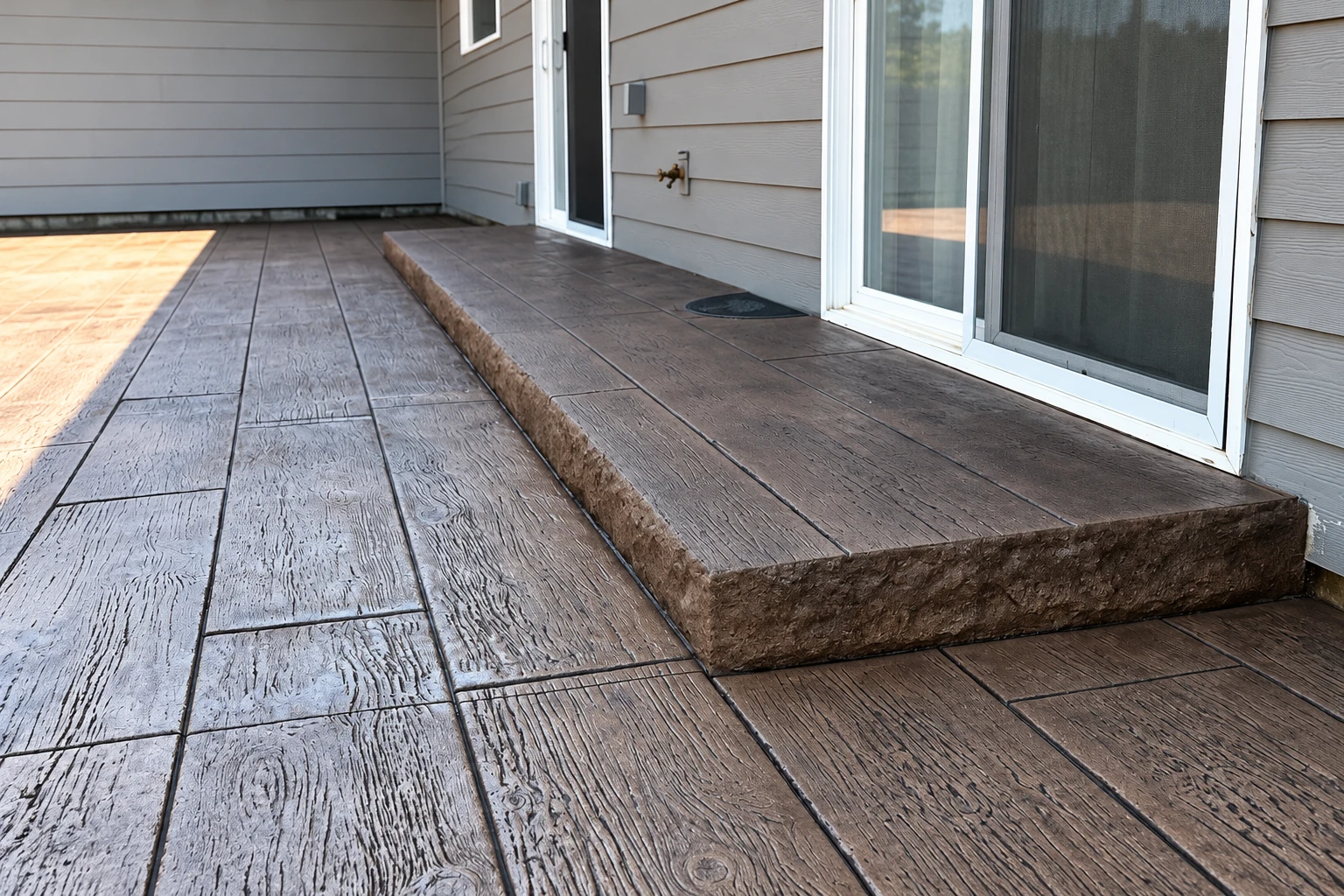
Examples of concrete paving work
Why call us for parking lot work
I walk the lot myself
I come out myself to look at the site and put the estimate together, and I ask about lot size and car count right then, since in San Clemente those numbers decide which city water rules apply. After that, our own crew does the work with a crew lead running the site, so nothing gets lost between the estimate and the pour.
Years on commercial lots first
Before I started this business in San Clemente in 2021, I spent years with a big commercial concrete outfit pouring slabs, parking lots and foundations. That's where I learned to get the paperwork straight before anyone mixes a yard, and that matters on a lot where the city looks at the water plan first.
Fully licensed and insured in California
We're fully licensed and insured, and the state licensing board defines a concrete contractor as one who forms, pours and finishes pavement and flatwork, which covers slabs like lots, driveways and walks. That board can discipline a contractor's license, so the license behind your lot means something.
Our work is satisfaction guaranteed. Send us your lot's details or call (949) 312-6327, and I'll set up a time to walk the site with you.
(949) 312-6327Get a written quote for your concrete lot
We reply within one business day, and most of the time I'm the one who calls you back to set up a free estimate at your property, with no obligation. It helps to note the lot's rough size, how many vehicles it needs to hold now and later, and whether it's in the Coastal Zone. After I walk the site, you get the written quote.
Parking lot questions from San Clemente owners
Does my parking lot count as a priority project in San Clemente?
It does if the lot is 5,000 square feet or more, or has 15 or more parking spaces, counting the drive aisle. Priority projects have to meet the city's water quality and runoff-control plans, so lot size decides which water rules the design follows. I'll sort this out with you on the first visit, because it changes the design.
What does a concrete slab cost per square foot in Orange County?
A concrete slab in Orange County usually costs about $7 to $14 per square foot, and that's the general market figure for slab work, not a price for your lot. A lot also brings engineering, city water requirements and often old paving to remove. Call (949) 312-6327 and I'll give you a real number once I've walked your site.
How long does it take before cars can park on a new concrete lot?
An Orange County cost guide says a slab should be walkable within 48 hours and suggests waiting a week before heavier loads. Concrete takes a month to fully cure, so plan where tenants or customers will park during those first days. On a lot that has to stay partly open, we can talk about pouring it in sections.
Who decides how thick a concrete parking lot slab should be?
The engineers do. A national concrete trade group recommends that a geotechnical engineer, who studies the ground, set the thickness based on how well the ground supports the slab. A civil engineer sets concrete strength, joints and drainage, and the traffic the lot will carry matters too. Plan on engineers' work alongside ours, and we build to what they specify.
How do I prepare for a concrete parking lot estimate?
Start with a rough count of the vehicles the lot holds today and how many you expect in later years, since that expected traffic is the owner's part of the design. Note the lot's rough size too, even if you just pace it off. With those two numbers I can tell you early whether an engineer should come in now.
Do I need accessible parking spaces in a new concrete lot in California?
Plan on it, because the state's accessibility code applies barrier-free design to the site work it covers, so the lot has to be accessible to and usable by people with disabilities. A contractor who ignores those rules can face license discipline and civil liability, so it's fair to ask any crew how they'll meet them. We build the accessible spaces to the approved plans.
Plan your parking lot, footings and drainage with us
Call (949) 312-6327 before the plans are final, so we can raise construction questions while changes are still easy to make on paper.